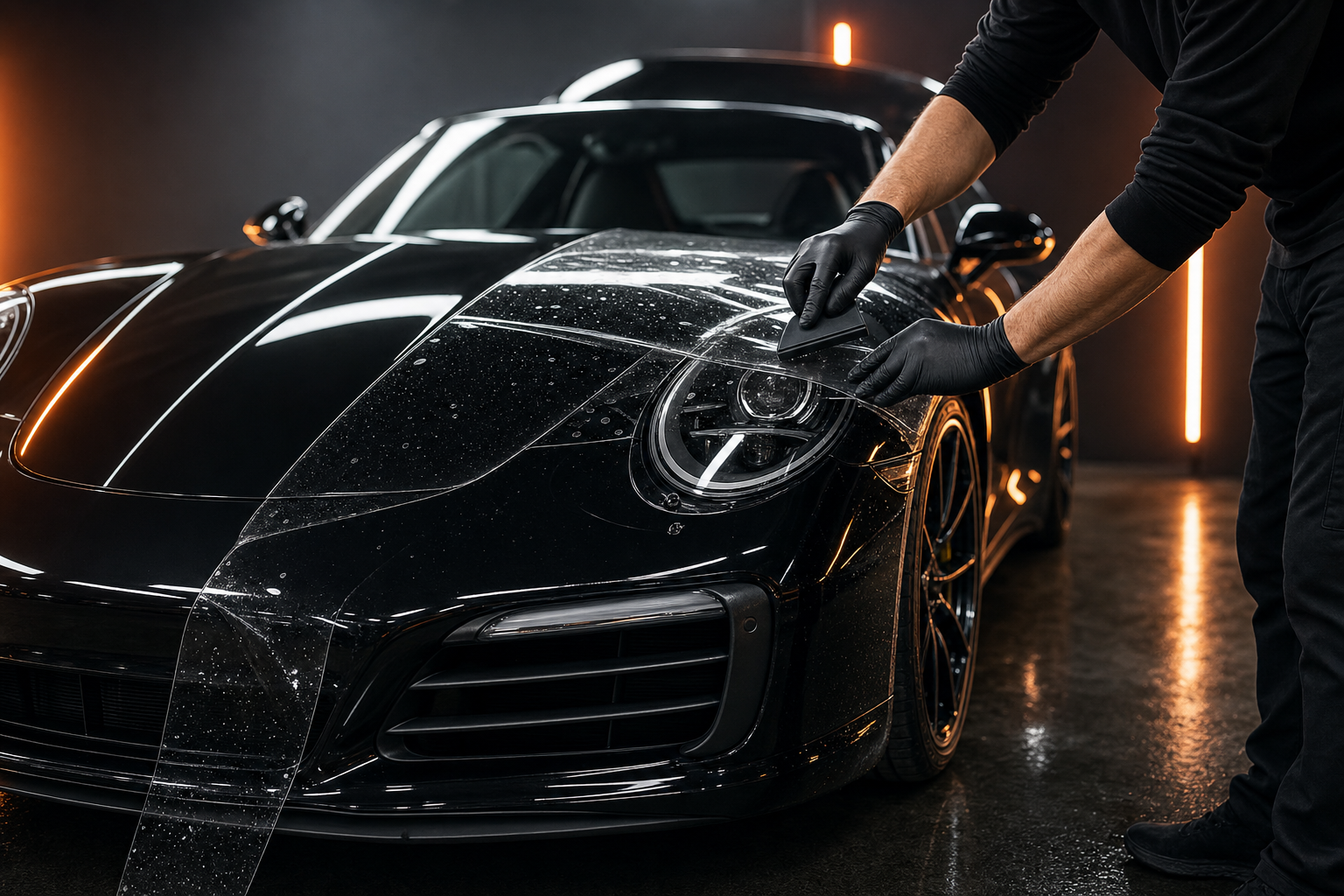
If you've owned a car in the GTA for more than a year, you've already lived this story. The pristine hood you drove off the lot started picking up tiny stone marks somewhere along the 401. The leading edge of the front bumper looks dull and pock-marked. The clear coat is starting to thin around the headlights. Toronto roads are an aggressive environment, and your paint is the front line.
Here's a season-by-season look at what's actually happening to your finish, and what paint protection film does to fight back.
Spring: The Worst Quarter for Your Paint
Conventional wisdom says winter is the hardest on paint. Wrong. Spring is. As temperatures cycle above and below freezing, every road in Ontario becomes a riverbed of meltwater, salt brine, sand, and loose gravel ejected from construction zones that suddenly reopen.
The 400-series highways are particularly hostile. Pickup trucks throw stones from their tires at highway speed; aggregate from roadwork shoulders gets swept onto the road by passing traffic. A 30g pebble hitting your hood at 100 km/h carries roughly the impact energy of a hammer tap.
PPF absorbs this energy. The 8 mil urethane layer compresses, dissipates, and self-heals, your paint never feels it.
Summer: UV, Bug Acid, and Hot Asphalt
The summer sun in Ontario is more intense than most owners realise, and clear coat is photosensitive. Over a single Toronto summer of regular outdoor parking, you can measure a quantifiable drop in clear-coat thickness. Dark colours fade fastest; reds shift toward orange; blacks oxidize toward grey.
Bug season runs May through September. Bug acid is genuinely acidic and will etch unprotected clear coat in a few hours. PPF (and ceramic) creates a chemically resistant surface that resists this etching.
Fall: Leaves, Sap, and Acid Rain
Tree sap is the most under-discussed paint killer. Once it dries on a hot panel, removing it without damage is hard. Fall also brings the first frosts, the first reapplications of road salt, and the first ice-scrape damage when owners forget to clear their hoods before driving.
Winter: Salt and Sand
Toronto's winter road maintenance uses a mix of rock salt, calcium chloride brine, and sand. All three are corrosive. Salt brine actively dissolves the chemistry of unprotected clear coat over time, and sand is essentially fine-grain sandpaper applied at highway speed.
Even more damaging: the slush spray from the vehicle ahead of you. It's saturated salt water plus tiny embedded debris, hitting your front end at relative velocity. Without PPF, the front bumper of a winter-driven Toronto car is the first panel to need repair.
Year-Over-Year Damage You Can't See, Until You Can
None of this is visible in week one. You won't see the damage building. But after 24 months, you will. The clear coat on the leading edge of the bumper begins to look dull and matte. Light reflects unevenly off the hood. Rock-chip pock-marks accumulate. A repaint at this stage costs $4,000-$8,000 for a high-end vehicle, and never quite matches the factory finish.
What PPF Actually Costs Over Time
A Full Front PPF install at Marvel Car Clinic starts at the current promotional rate of $1,500. Over a 7-year ownership period, that's about $18/month. The same vehicle without PPF may need a repaint at some point and can fetch less at trade-in; compare the actual condition and ownership plan for your vehicle.
Where to Start
If you're not ready for a Full Front, our Partial Front package covers the impact-critical surfaces (hood leading edge, bumper, headlights, mirrors) from the current promotional rate of $949. It is a focused option for customers who want coverage on the most exposed areas.
See all PPF packages or request a quote, we'll inspect your current paint and recommend exactly what your vehicle needs.