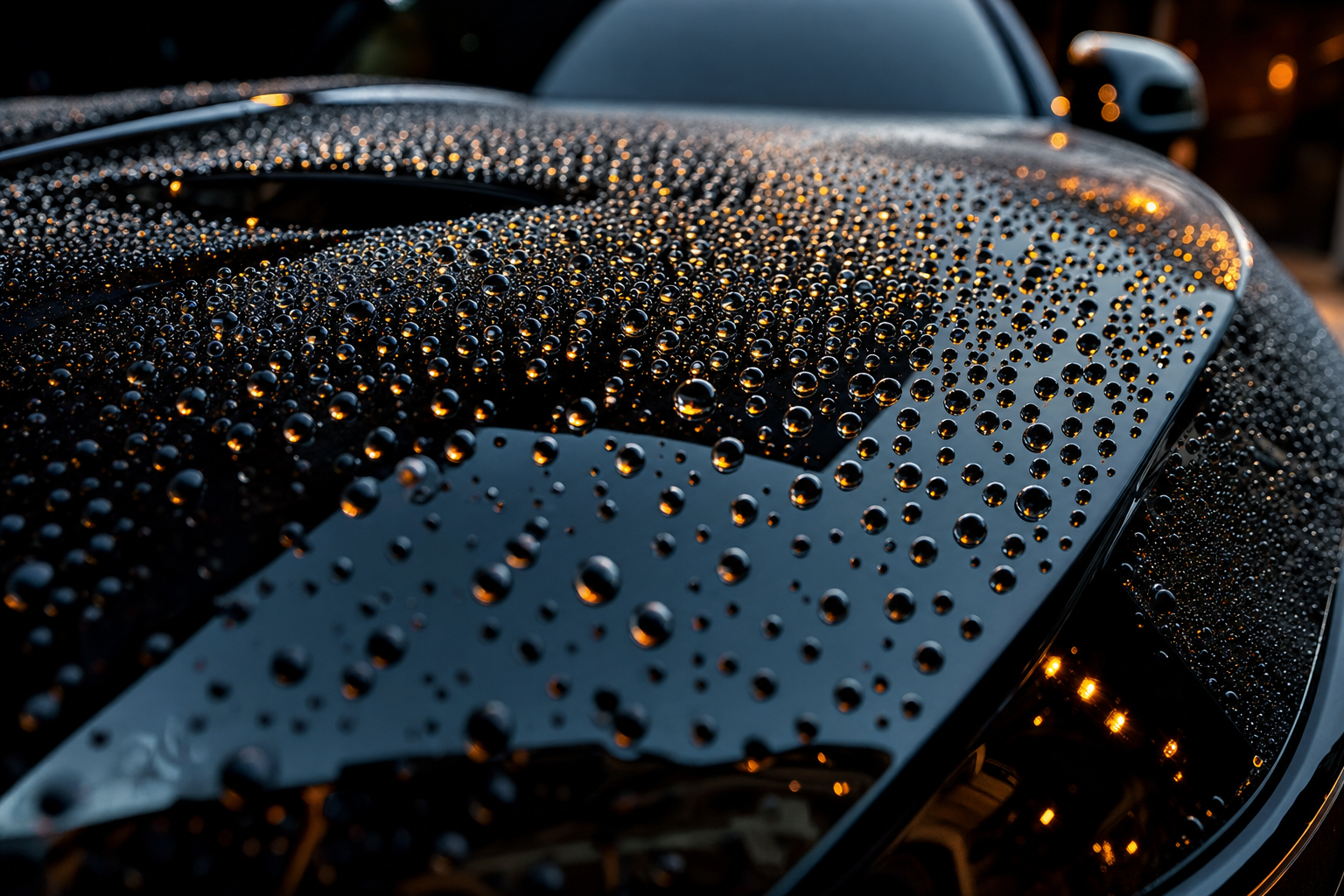
Ceramic coating is one of the most over-marketed products in automotive aftercare. The chemistry is genuinely impressive, but the marketing has done it a disservice, to the point where many owners (and even some detailers) have inaccurate expectations. Let's clear up the five most common myths we hear at Marvel Car Clinic.
Myth 1: "It's Scratch Proof"
Ceramic coatings are advertised with a 9H hardness rating, which sounds like armour. It isn't. The 9H rating measures pencil hardness, a specific scratch test using graphite, not impact or abrasion resistance. A ceramic coating will resist very light marring and swirl marks. It will not resist a key, a tree branch, or gravel from the 401. Anything that would scratch your paint will still scratch your paint.
For real scratch protection, you need PPF. Ceramic complements PPF, but does not replace it.
Myth 2: "It Lasts Forever"
Some manufacturers advertise "lifetime" coatings. In real-world Toronto conditions, no coating lasts forever. The polymer layer wears as washes, UV, and chemical contact gradually erode it. Premium coatings deliver 5-7 years of useful hydrophobic life with proper maintenance. Anything claiming longer is either marketing fluff or assumes garage-queen ownership.
Myth 3: "DIY Spray Coatings Are the Same Thing"
Spray-on consumer coatings (the kind sold for $40-80 at auto stores) are real ceramic chemistry, but at much lower concentration and with much shorter lifespan, typically 3-6 months. They give you a taste of what a professional coating does. They are not equivalent products. The professional coatings we apply are 80%+ ceramic content, multi-layered, and require paint correction first to bond properly.
Myth 4: "It Replaces Paint Correction"
The opposite is true. Ceramic locks in whatever state your paint is in at the moment of application. If your paint has swirl marks, you'll have swirl marks frozen under a ceramic layer for 5+ years. Every Marvel Car Clinic ceramic install starts with multi-stage paint correction precisely for this reason. If an installer skips correction, walk away.
Myth 5: "Ceramic Cars Don't Need Washing"
They need washing differently, less effort, less frequently, but they still need washing. The hydrophobic surface makes the wash dramatically easier, but dust, pollen, brake dust, and road grime still accumulate. The rule we give clients: a quick rinse weekly, a proper hand wash every 2-3 weeks, and a maintenance inspection annually.
How to Spot a Quality Install
- The installer paint-corrects before applying ceramic
- The work is done in a climate-controlled bay (not outdoors)
- The vehicle is kept overnight for cure (not handed back in 2 hours)
- You receive a written warranty registered with the manufacturer
- You receive a printed aftercare guide on hand-off
Every one of these is standard practice at Marvel Car Clinic. See our ceramic packages and current market-check promotional pricing, with a matched-material GTA price-match review available.*